How We Built Developer Reach for Composio, DigitalOcean, and Undermind
Thu, Mar 12, 2026 · 18 min read
TL;DR
- Challenge: Three AI companies needed to reach different audiences. Composio had an MCP infrastructure tool that developers did not understand. DigitalOcean competed with AWS and GCP for cloud mindshare. Undermind had a research tool for academics who do not use social media.
- Solution: We built a multi-platform distribution engine. Our team ran short-form videos on Instagram and YouTube, supporting them with posts on Reddit and Twitter. To match each audience, we adapted the tone while keeping a single production format.
- Results:
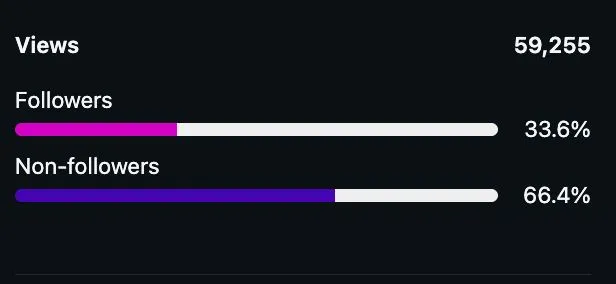
- Composio: One content piece generated 59,255 views, 2,183 saves, 2,167 shares, and 66.4% non-follower reach. The 3.7% save rate exceeded the industry baseline by three to seven times.
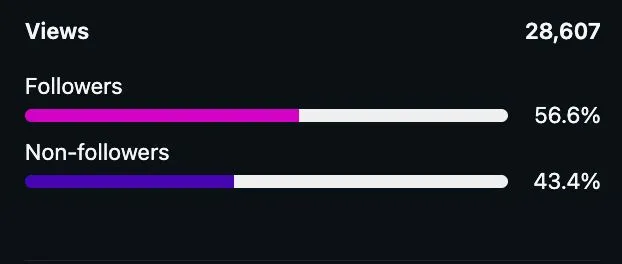
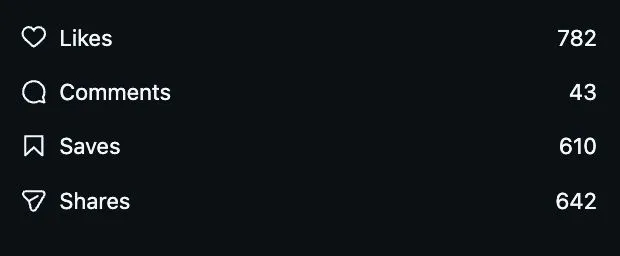
- DigitalOcean Gradient Platform: One content piece generated 28,607 views, 610 saves, and 642 shares. Eleven users asked for the product link in the comments. The official DigitalOcean account commented on the content, sharing it with their followers.
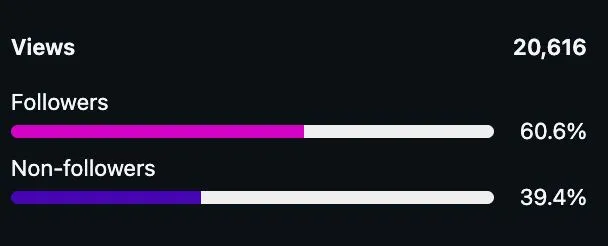
- Undermind: One content piece generated 20,616 views from researchers and academics. Every comment came from a user comparing the tool to ChatGPT Deep Research or Perplexity.
- Total Impact: The three campaigns generated 108,000 views, 4,120 likes, 3,262 saves, and 3,051 shares. We also ran organic distribution on Reddit and Twitter.
- Key Finding: Saves show real intent, while likes do not. High save and share rates occurred because the content gave developers practical value.
The Problem Every AI Company Faces
You build infrastructure, a platform, or a tool that solves a hard problem. Your engineering is sharp, your documentation is clear, and your roadmap is set.
Yet, your target users do not know you exist.
This gap separates a working product from active developer adoption. The challenge persists whether you are pre-seed or post-Series-B. Composio had strong adoption inside the Model Context Protocol (MCP) and agent infrastructure community, but other developers found MCP servers abstract. DigitalOcean serves millions of developers, but their new Gradient Platform needed to build its own audience. Two MIT physics PhDs built Undermind with deep technical value, but scientists do not respond to standard developer marketing.
We solved three distinct problems for three different audiences using one adaptable distribution engine.
Standard marketing channels fail here:
- Paid ads on LinkedIn or Twitter consume budget for impressions rather than qualified developers.
- Cold outreach to scientists or DevOps engineers ends up in spam folders.
- Developer content on Substack or Hashnode requires months to show results.
- Product Hunt launches create a brief spike that disappears by Monday.
From March to May 2025, we ran three distribution campaigns for Composio, DigitalOcean, and Undermind. We led each campaign with short-form videos on Instagram and YouTube, and supported them with organic posts on Reddit and Twitter. Our team tracked qualified engagement instead of vanity metrics. Each campaign achieved save and share rates that exceeded industry benchmarks by two to seven times.
We measured metrics that showed real intent and ignored the rest.
Case Study 1: Composio
The Product
Composio connects AI agents to 500+ external apps, including Gmail, Slack, GitHub, Notion, Linear, Reddit, Twitter, and HubSpot. Developers use MCP servers or direct APIs to establish these connections. Their universal MCP server, Rube, runs inside Claude, Cursor, ChatGPT, VS Code, and other MCP-compatible clients. When a developer asks an agent to send an email or create a ticket, Composio manages the authentication, API calls, and workflow steps.
Instead of writing custom code for Gmail, Slack, and GitHub APIs, you connect once. Your agent then interacts with these apps using natural language.
Target Audience: Backend engineers building production AI agents, indie hackers shipping side projects, founders of AI startups who need integrations, and the broader MCP and Claude Code community.
The Problem
In March 2025, developers talked about MCP, but few understood how to use it. While agent infrastructure teams adopted Composio, other developers struggled to understand its value. The audience faced three main barriers:
- Lack of understanding. Developers kept asking, "What is MCP?" The trending term created awareness, but not understanding.
- Crowded market. Established platforms like Zapier, n8n, and Make dominate integrations. A new tool must prove its unique value in under a minute.
- Feature overload. Composio has too many features for a short video. We had to showcase one clear use case rather than the entire platform.
Our Approach
We promised a "Complete Tutorial" in the caption, leaving a minor typo to keep it looking human. The hook targeted developers interested in MCP, and the video delivered on that promise in the first ten seconds.
We split the screen. The top half displayed a graphic showing Twitter and Reddit logos connected by plus signs, illustrating how to link agents to external platforms. Paras appeared on camera in the bottom half. Text overlays guided viewers through a structured list. We avoided trending audio, relying instead on original sound to let the content speak for itself.
We put the product link in the caption to make trying it easy. Our team selected six targeted hashtags, including #mcp and #claude, which were trending search terms.
We also promoted the launch on Reddit and Twitter. Keeping those specific playbooks private protects our clients' competitive edge.
The Results
- Posted: March 26, 2025
- Views: 59,255 on Instagram
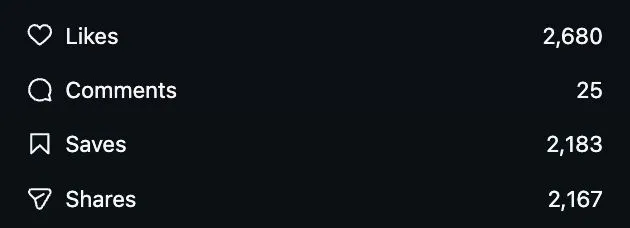
- Likes: 2,680
- Saves: 2,183 (a 3.7% save rate, compared to the 0.5% to 1.5% industry baseline)
- Shares: 2,167
- Non-follower reach: 66.4%, showing that the Instagram algorithm pushed the content to new audiences
- Comments: 25, with developers asking technical and pricing questions
Saves and shares show real intent. A save means a developer plans to try the tool later. Sharing means they sent it to a colleague or a Slack channel. Both actions lead to product adoption.
Comments revealed active evaluation. Viewers asked about API requirements, pricing, open-source LLM connections, and specific integrations. Every comment came from a potential user.
The content reached 66.4% non-followers. This algorithmic push proves the content solved a real problem for a new audience.
Composio campaign
Case Study 2: DigitalOcean Gradient Platform
The Product
DigitalOcean Gradient Platform, which launched as GenAI Platform in January 2025 and rebranded later that year, is a managed service for building and deploying AI agents. The platform uses foundation models from OpenAI, Anthropic, and Meta. It manages agent creation, retrieval-augmented generation, function calling, agent versioning, knowledge base citations, and serverless inference. This setup allows developers to move from prototype to production without managing GPU infrastructure or combining multiple tools.
Gradient Platform simplifies the process for developers who want to avoid deploying and scaling their own model-serving stack. You bring your data and use case, and the platform manages the rest.
Target Audience: Backend developers adding AI features to existing products, startup CTOs evaluating cloud platforms for AI workloads, and DigitalOcean users who run droplets, App Platform, or Kubernetes.
The Problem
DigitalOcean has a large developer audience, but Gradient Platform entered a market competing with AWS Bedrock, GCP Vertex AI, and Azure AI Foundry. The team faced three specific challenges:
- Mindshare barriers. Developers default to AWS or GCP for AI agent platforms because they know those services.
- Brand perception. Developers associate DigitalOcean with simple cloud hosting rather than AI infrastructure. This perception works against them when users search for an AI agent platform.
- Rapid product changes. The platform rebranded from GenAI Platform to Gradient Platform and added features every few weeks. Our campaign had to present the core value so the message remained accurate as the product evolved.
Our Approach
We opened with a direct question: "Wanna build AI Agents?" This hook targeted the exact developers DigitalOcean wanted to reach and led them into a 60-second walkthrough.
We paired an actual screenshot of the Gradient Platform dashboard with Paras on camera explaining the value. Real product interfaces build trust faster than mockups or animations. The DigitalOcean shark logo provided instant brand recognition, and the text overlay reinforced the message.
The caption summarized the value proposition: "deploy powerful models with just a few clicks." We used a single branded hashtag, #DOgenAI, to provide clean attribution for DigitalOcean's marketing team.
To support the launch, we ran a coordinated push on Reddit in developer subreddits where AI infrastructure conversations were active. We also ran a targeted Twitter campaign during the same launch window. Keeping those specific playbooks private protects our clients' competitive edge.
The Results
- Posted: May 1, 2025
- Views: 28,607 on Instagram
- Likes: 782
- Saves: 610 (a 2.1% save rate, exceeding the industry baseline)
- Shares: 642
- Comments: 43, with 11 users commenting "Link" to request the product URL
- Non-follower reach: 43.4%
- Bonus amplification: The official
@thedigitaloceanaccount commented on the content, sharing it with their followers
The eleven comments requesting a link show high intent. Each comment represents a viewer who watched the video, decided to try the product, and asked for the URL. This action represents a stronger signal than a like or a save, creating a list of warm leads in the comment section.
The official DigitalOcean account added a second wave of distribution. Their comment triggered notifications for their followers, surfacing the content to a high-trust segment of their audience.
The campaign reached 56.6% followers and 43.4% non-followers. This distribution shows the campaign engaged Paras's existing developer audience, which was the goal for this branded launch. When a paid brand deal converts within an existing audience, the brand receives qualified clicks, the creator builds trust, and the algorithm keeps the content active.
DigitalOcean Gradient Platform campaign
Case Study 3: Undermind
The Product
Two MIT quantum physics PhDs built Undermind, an AI research assistant. The tool reads thousands of scientific papers per query, traverses citation graphs, and evaluates relevance like an expert researcher. It condenses weeks of literature review into ten minutes of agent work. Over 1,000 scientists at GSK use the platform, along with researchers at MIT, Harvard, Caltech, and Princeton.
Google Scholar returns a ranked list and leaves the synthesis to you. Undermind classifies papers into relevant, related, or ignorable categories, then surfaces the smallest set of papers you need to read. This process saves time for drug discovery teams, novelty assessments, and frontier-topic exploration.
Target Audience: Academic researchers, R&D scientists in pharma and biotech, PhD students working on literature reviews, and AI researchers comparing tools against ChatGPT Deep Research and Perplexity.
The Problem
Undermind targets researchers and scientists, a smaller and more selective audience than general developers. These users do not scroll Instagram for product recommendations. They distrust marketing language and evaluate tools against established options like ChatGPT, Perplexity, Elicit, and Consensus.
We identified three specific challenges:
- Credibility requirements. A research tool without academic legitimacy fails. The MIT PhD origin provided our strongest trust signal, so we led with it.
- Tonal mismatch. Playful graphics, energetic delivery, and gaming references work for general developers, but an academic audience expects gravitas.
- Clear differentiation. Comparing a tool to ChatGPT Deep Research is not a pitch. The content had to explain the specific mechanism, such as citation graph traversal and relevance classification, without sounding like a lecture.
Our Approach
We changed the visual tone from the Composio and DigitalOcean content pieces. The video opened with a dark lab scene showing a researcher inside a blue holographic environment, with the text overlay "ON RESEARCH." This aesthetic signaled a serious tool for serious work before Paras appeared on camera.
Our caption hook led with the strongest credential: "MIT PhD Grads built Undermind." For an academic audience, founder credentials establish trust.
Reddit served as a critical supporting channel because researchers read r/MachineLearning, r/AskAcademia, and r/PhD. We ran content in those communities during the launch window. Keeping those specific playbooks private protects our clients' competitive edge.
The Results
- Posted: April 2, 2025
- Views: 20,616 on Instagram
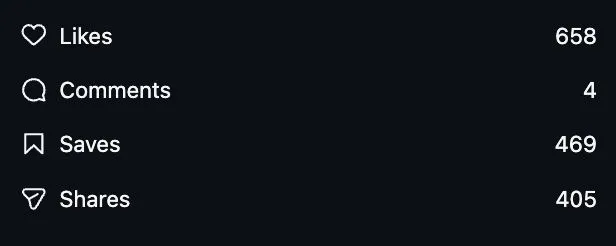
- Likes: 658
- Saves: 469 (a 2.3% save rate, exceeding the industry baseline)
- Shares: 405
- Comments: 4, with every comment coming from an active evaluator
- Non-follower reach: 39.4%
Low comment volume can mislead. While four comments seems small compared to Composio's 25 or DigitalOcean's 43, the comment quality showed high intent:
- One viewer asked how the tool differed from GPT Deep Research and Perplexity, showing active evaluation.
- Another researcher asked about academic integrity and AI-detection flags, showing a real user concern.
- Sharing occurred when a third user tagged a colleague to show them the video.
Niche audiences do not generate high comment volume because the total audience is small. The right metric for a niche campaign is the quality of engagement. By this standard, the content succeeded.
The save rate reached 2.3%, exceeding the industry baseline despite the selective audience. This performance shows the content earned a high-intent signal from an audience that is hard to convert.
Undermind campaign
The Pattern: What Drives Conversion for AI Companies
Data from these three campaigns reveals clear patterns that apply across the AI and developer tool market.
1. Save Rate Shows Intent, Not Likes
Likes represent quick reactions. Saves show intent. When a developer saves a video, they plan to return and try the product. Shares function like saves, adding a social recommendation when a viewer sends the video to a colleague.
Across our campaigns, save rates ranged from 2.1% to 3.7%, compared to the 0.5% to 1.5% industry baseline for short-form developer content. These results exceed the baseline by two to seven times. To achieve these numbers, you must provide practical value that developers want to revisit.
Measuring success by likes means tracking the wrong metric.
2. Match the Hook to the Audience, Not the Brand
We used three distinct hook strategies:
- Composio: "Complete Tutorial" (a promise hook for developers who want to learn and build)
- DigitalOcean: "Wanna build AI Agents?" (a question hook for broad developer interest)
- Undermind: "MIT PhD Grads built Undermind" (a credibility hook for researchers who value academic credentials)
Swapping these hooks would have caused the campaigns to fail. The hook is an audience targeting tool, not a creative preference. We selected each hook based on what the target audience valued.
3. Keep the Format Consistent, Adapt the Tone
All three videos used the same production format. We split the screen to show the product interface or graphic on top and Paras on camera at the bottom, using text overlays and original audio. This consistency builds brand association. Viewers recognize the format as a trust signal by the second or third video.
We adapted the tone for each audience. Composio used an energetic tone. DigitalOcean remained professional. Undermind shifted to a cinematic, academic style. The format provides the structure, while the tone matches the audience.
4. One Format Supports Multiple Collaboration Models
The Composio campaign ran as an organic integration with a product link. DigitalOcean used a paid brand deal with a branded hashtag. Undermind also ran as a key organic distribution partner. All three campaigns generated strong engagement and high save rates using the same video format.
A distribution partner who can execute organic and branded campaigns without losing content quality provides real value.
5. Multi-Platform Distribution Outperforms Single-Platform Campaigns
Instagram and YouTube drive our primary reach because we built our developer audience there. We also ran these campaigns on Reddit and Twitter. Reddit reaches niche, high-context audiences, while Twitter allows developers to share content within their networks. Our private channels maintain our competitive edge.
A single-channel campaign limits your reach to one platform's ceiling. Multi-platform distribution compounds results because each channel reaches a different segment of the audience, and cross-platform repetition builds trust.
The Numbers
To read this table: we calculate the "Save Rate" by dividing saves by views. This metric provides the clearest measure of high-intent engagement for short-form content. The industry baseline for short-form developer content ranges from 0.5% to 1.5%.
| Campaign | Views | Likes | Comments | Saves | Shares | Save Rate | Non-Follower Reach |
|---|---|---|---|---|---|---|---|
| Composio | 59,255 | 2,680 | 25 | 2,183 | 2,167 | ~3.7% | 66.4% |
| DigitalOcean | 28,607 | 782 | 43 | 610 | 642 | ~2.1% | 43.4% |
| Undermind | 20,616 | 658 | 4 | 469 | 405 | ~2.3% | 39.4% |
| Total | 108,478 | 4,120 | 72 | 3,262 | 3,214 | ~2.7% avg | 49.7% avg |
Composio achieved the highest numbers because the broad audience interested in MCP searched for content in March 2025. The DigitalOcean campaign engaged existing followers because we designed the paid brand deal to convert our established audience. Our Undermind campaign generated high-quality engagement per view because we targeted a narrow, selective audience.
NOTE: The total view, like, save, and share numbers in this table represent Instagram performance. These campaigns also generated cross-platform reach on YouTube, Reddit, and Twitter, as well as private client channels. The Instagram metrics show clear results, and we report verified data.
Frequently Asked Questions
What makes your approach different from a standard influencer marketing agency?+
We build distribution instead of chasing impressions. A standard agency hires a creator, publishes a sponsored post, and reports view counts. Our team selects the hook based on the audience your product needs, designs the video format to maximize saves and shares, and runs multi-platform distribution across Instagram, YouTube, Reddit, and Twitter. We report qualified developer reach rather than vanity metrics. The Composio video achieved a 3.7% save rate, exceeding the industry baseline by three to seven times.
Does this work for niche products targeting researchers or scientists?+
Yes. The Undermind campaign proves this. We reached a niche academic audience using a distinct visual style and a credibility-led hook. The campaign generated 469 saves and 405 shares from users who do not use social media for product discovery. Our team recorded a 2.3% save rate despite the narrow audience. We match the hook, visual tone, and supporting platforms to your target users. The video format remains consistent, but the execution adapts.
Do you work on brand deals or customized integrations?+
Yes, we support multiple collaboration structures. The Composio campaign ran as an organic integration with a product link, while DigitalOcean used a paid brand deal with a branded hashtag. We customize each distribution campaign to match your business model and target metrics—whether you want subscription signups, developer trial registration, or community growth.
Which platforms do you use for distribution?+
We use Instagram and YouTube as our primary channels because we built our developer audience there. For campaigns that require niche targeting, we add Reddit and Twitter. Our team also runs private channels to maintain our competitive edge. We outline the full distribution map for your product during our discovery call.
When can we expect to see results?+
Most engagement occurs within the first fourteen days, with the strongest response in the first 72 hours. The Composio video generated most of its 59,000 views in the first two weeks. DigitalOcean received its comment surge in the first week. The Undermind video built engagement over the first month, which is standard for academic audiences. We can design a campaign for a fourteen-day spike or build a long-term distribution engine over 90 days.
Why do you focus on save rate as the primary metric?+
Likes represent quick reactions. Saves show intent. When a developer saves a video, they plan to return and try the product. Save rate provides the clearest measure of product trial intent for short-form video. The industry baseline for developer short-form content ranges from 0.5% to 1.5%. Our campaigns achieved 3.7%, 2.1%, and 2.3%.
How does this compare to hiring a full-time developer relations engineer?+
A developer relations hire requires a full-time salary of $150,000 to $250,000 per year. That individual needs six to twelve months to build an audience, test content formats, and establish consistent production. Success depends on one person, and the audience leaves when they do.
We provide an active distribution engine with an established developer audience, a proven video format, and a multi-platform setup. You receive measurable engagement in weeks. While a developer relations engineer builds deep community relationships over time, we deliver immediate, qualified developer reach.
Three High-Impact Moves in 15 Days
Most of what you just read started with one move, the right product in front of the right audience. Varnan Ignition packages that into a fixed 15-day sprint, so you can watch the engine work before committing to anything longer.
Here's what's inside:
- Media on a 250K network. Your product placed in front of an organic audience of 250,000 through content built for it.
- A taste of Reddit marketing. Strategic placement in the communities your users already sit in, with a credible presence rather than a drive-by post.
- 5 design partners. Sourced from our founder and operator network, so you get structured feedback from people who have built and shipped.
The shape is simple: apply, a 45-minute onboarding call, 14 days of execution, then results in your hands. 15 days, $2,000, and you keep everything we build. No commitment past the sprint.
Are You a Good Fit?
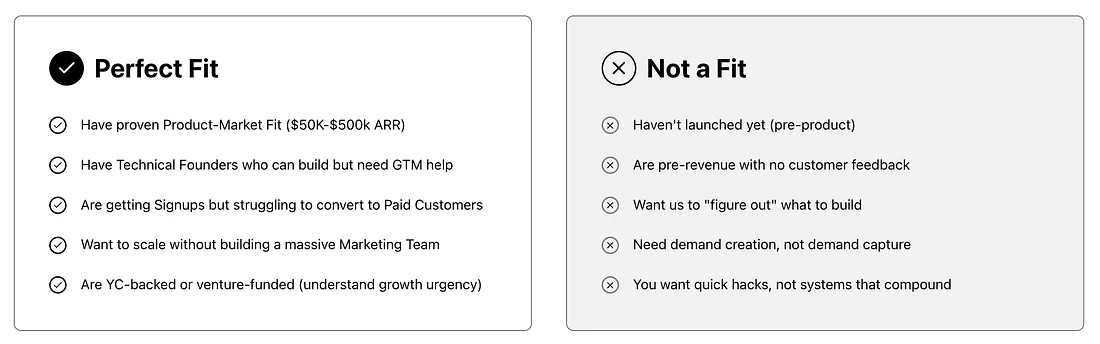
We select our clients. Our team partners with founders who have a working product, initial traction, and a readiness to scale.
If you built a product worth discovering, we will help the right users find it.
Book a strategy session
We will analyze your product positioning, identify your target audience, and outline a 90-day plan to generate measurable results. Book a free call to start.