Why Varnan Couldn’t Help Scott AI, Even After the Work Was Done
Mon, Aug 17, 2026 · 10 min read
TL;DR
- Client: Scott AI, a YC Fall 2025 company building a shared planning and review space for engineering teams using coding agents.
- Problem: Coding agents can produce a large build before the people around the build have agreed on the plan.
- What we did: Varnan tested the problem in public, spoke to engineers, and prepared the message, content, and contact list Scott would need for a launch.
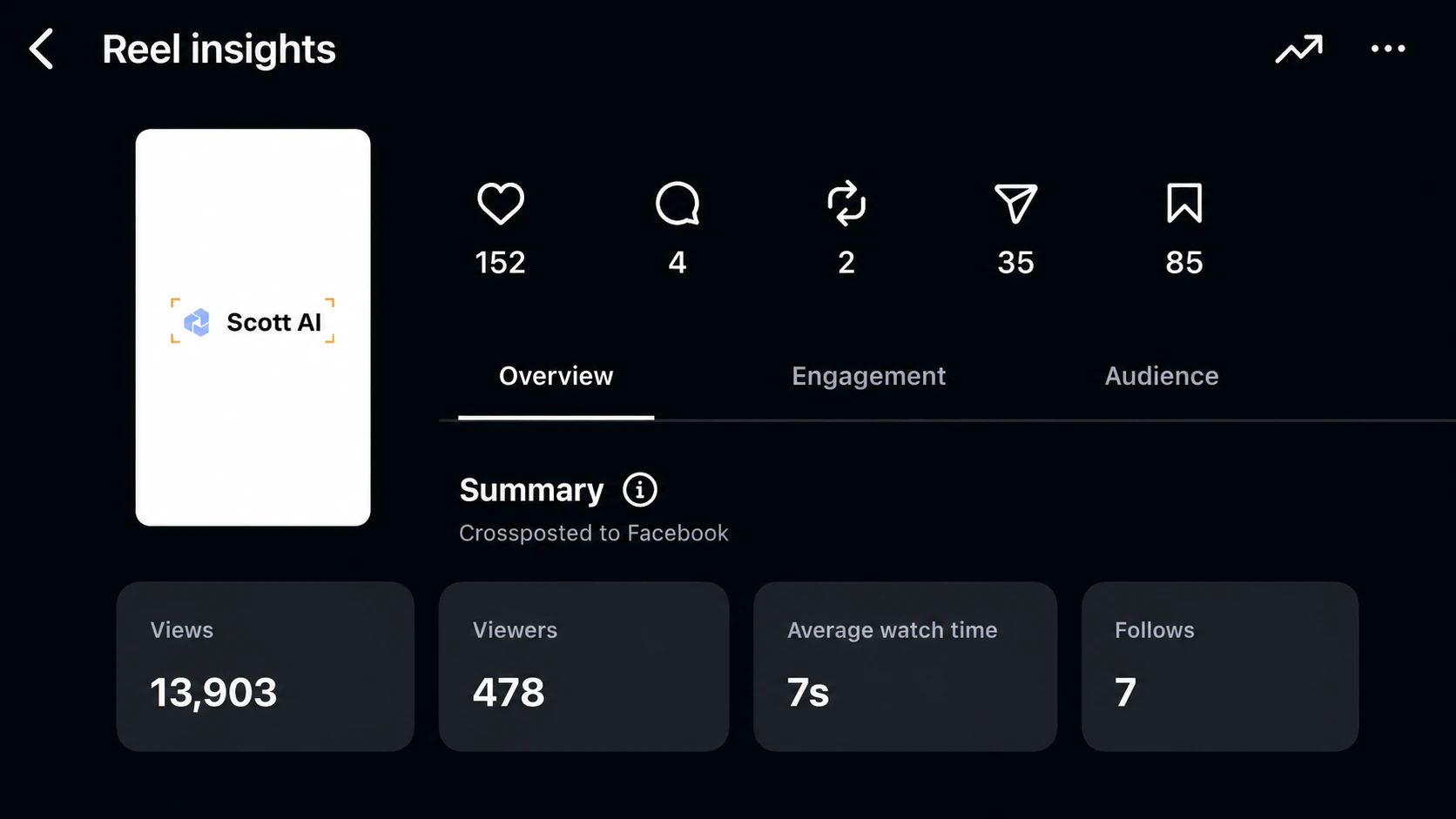
- The Reel: 13,903 views, 152 likes, 85 saves, and 35 sends.
- Why it stopped here: Scott paused twice while the product and message changed. The restart did not include a publishing decision or a company sender for outreach. Varnan had the work ready. The launch never went out.
The Product: Scott AI
Scott AI gives engineering teams a shared place to make the decisions that sit between an idea and an agent-generated build. The product keeps the plan close to codebase context and agent output. People can review the work, branch an approach, add comments, and send an approved plan back into the build.

Before coding agents, implementation forced a lot of decisions. An engineer had to answer questions about data, boundaries, edge cases, and ownership while trying to make the code run.
An agent can take a loose request and produce a large change before the team has agreed on those decisions. The problem moves upstream. The hard part becomes getting the plan, the context, and the approval in one place before the build starts.
The demo shows Scott AI's current workflow. Varnan tested the planning and review problem during the engagement.
The Challenge: Using Agents Was Not Enough
Scott did not need a broad list of developers who used Claude Code. Most people using an agent do not need another planning tool.
Varnan needed to find the teams where faster coding had made review slower. We also needed words that described a team decision, not another way to prompt an agent.
We began with the existing workflow. We asked developers and engineering leaders how they planned work, wrote requirements, reviewed changes, and carried context between people. Scott AI came into the conversation after the problem.
The Research: Public Signal, Then Interviews
Varnan put six problem prompts into public developer communities. We tested the gap between agent output and human review, the time lost between an idea and an approved plan, and the way AI changes a team’s decision cycle.
The comments gave us both signal and resistance. Some people said Claude’s plan mode covered the need. Others described the separate team problem: several people still had to review, debate, and approve the implementation plan.
A developer can use an agent to think through a task. A team still needs a place to decide what gets built and carry that decision into the work.
Posts Varnan published to test the problem
- r/ExperiencedDevs: AI shipping faster than the team can decide
- r/ClaudeCode: the space between Claude Code and human approval
- r/AI_Agents: humans still decide and approve
- r/SaaS: validation gates and team habits
- r/ClaudeAI: plan output needs a team handoff
- r/ExperiencedDevs: direct feedback on the framing
Varnan then held four recorded interviews. The conversations covered planning, documentation, review cycles, and the handoff from a rough idea to a build. One person wanted a single building guide that product, design, QA, and engineering could use. Another described a review cycle where the author had to chase people for feedback.
The Adobe engineering manager drew a useful boundary. Coding agents had not changed the company's high-level process enough to create an urgent need.
The high-level process had not changed much with coding agents.
~ Adobe engineering manager, Varnan interview
We ruled out teams that used agents without feeling new pressure in their review process. Scott fit teams where faster implementation had made review feel slow and fragmented.
Who Scott Should Talk To First
One group already used PRDs, technical design documents, or architecture reviews. Coding agents made implementation faster while review and sign-off stayed slow. Scott could give those teams a place to show the reasoning behind a plan and get an approval.
The other group had grown past informal coordination. They had moved quickly without a planning habit, then started to feel the cost of unclear decisions, missing context, and inconsistent reviews.
We ruled out very small, pre-product-market-fit teams that expected frequent pivots. They needed to learn fast. A review layer would only slow them down.
The first people to call were tech leads and engineering managers at Series A–C companies with more than five engineers, active coding-agent use, and review friction they could point to. A VP of Engineering would often own the budget. The tech lead or manager would feel the day-to-day pain.
The Pauses
Scott paused the engagement on 26 February while it worked towards a new release. On 31 March, Scott asked to extend the pause by another 2–4 weeks. In May, Scott asked Varnan to hold for one more week before the restart.
Varnan used two check-ins to see what had changed in the product. When Scott restarted, we did not need to repeat the research.
| Date | Scott's timeline | Varnan's work |
|---|---|---|
| 18–25 February | Product and buyer research phase | Six public posts, four interviews, positioning, and ICP work |
| 26 February | Scott paused around the upcoming release | Varnan held the work ready for restart |
| 31 March | Scott asked for another 2–4 weeks | Varnan kept research current through check-ins |
| 14 May | Scott asked for a final one-week hold | Varnan prepared the launch work |
| Late May–June | Scott restarted the engagement | Positioning, content, essay, Reel, and prospect list delivered |
What Varnan Had Ready
By the restart, Varnan had a straightforward way to run the launch: put a familiar problem in front of engineering teams, show Scott working, then speak to the teams most likely to care.
- The people. We narrowed the first audience to teams where agent speed had exposed a slow review process.
- The words. We wrote three content directions about planning, review, and missing context.
- The long read. We wrote The Codebase Used to Ask the Questions, a postmortem-led piece about the decisions teams can skip when agents write more of the code.
- The Reel. We made and published a Scott AI Reel. It reached 13,903 views.
- The list. We prepared 97 records, with 63 confirmed email addresses and 61 marked Best Fit.
Varnan kept names and email addresses out of this case study. Scott did not provide a company inbox for cold outreach because of security concerns. We kept the list ready for Scott instead of sending from an identity Scott had not approved.
The Reel
Varnan produced and published the Scott AI Reel.
Instagram reported 13,903 views, 152 likes, 85 saves, 35 sends, 4 comments, and 7 follows.
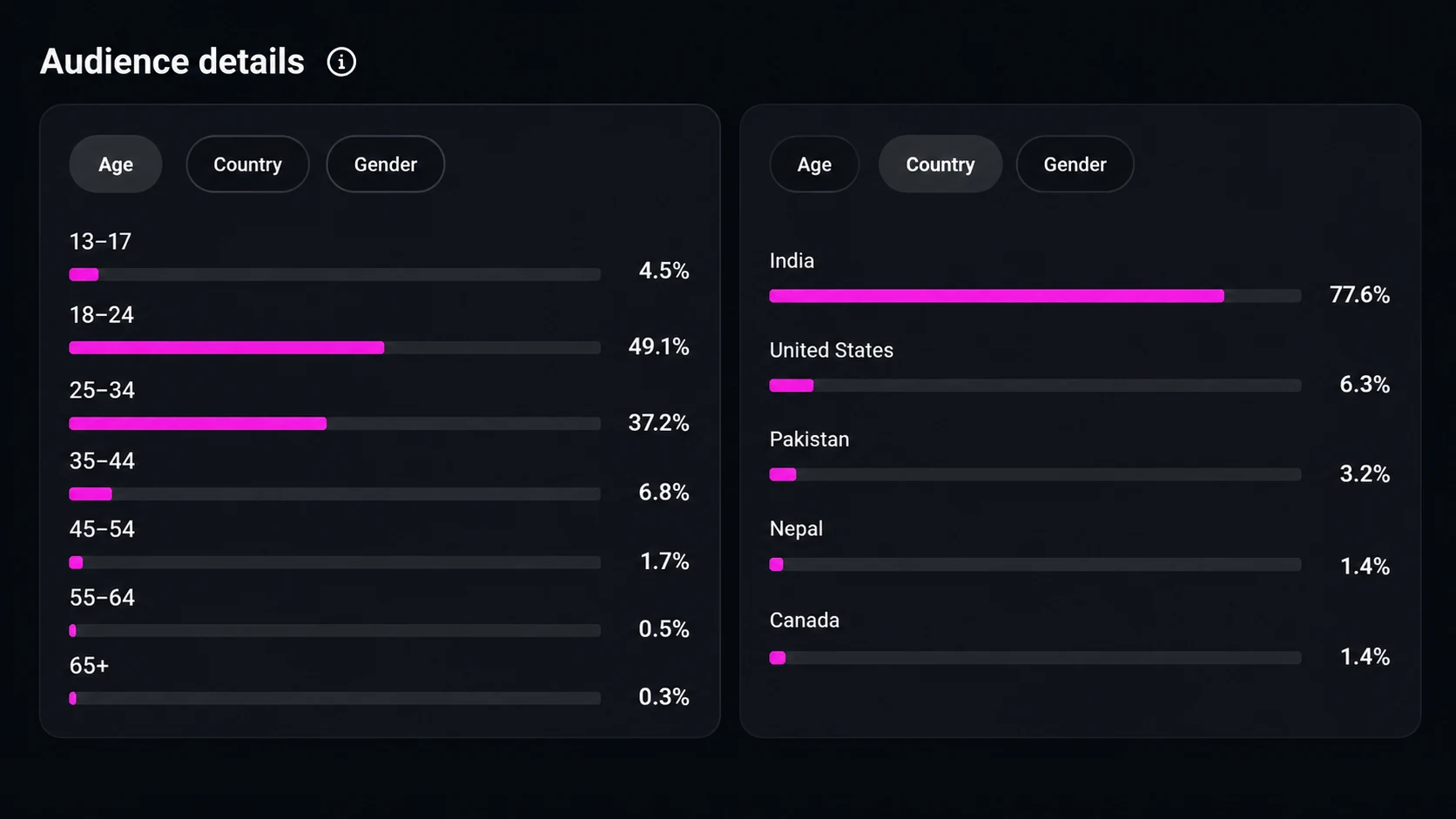
People aged 18–24 made up 49.1% of the audience, while people aged 25–34 made up 37.2%. India accounted for 77.6% of the audience. The United States accounted for 6.3%.
Those are content numbers. Scott did not connect a company sender, so the list and Reel never turned into an email campaign, meetings, or revenue.
The Blog: An Argument for Planning
Varnan wrote The Codebase Used to Ask the Questions for Scott AI. The draft asks what happens when agents collapse implementation time before a team has agreed on boundaries, ownership, and review.
Coding agents remove much of the friction that once forced a builder through small architecture decisions. The draft showed what a team can skip when it reaches a working demo before it has written down the reasoning behind the system.
The framing took inspiration from Maggie Appleton’s One Developer, Two Dozen Agents, Zero Alignment, which documents Ace, a collaborative workspace prototype from GitHub Next. Appleton argues that agreeing on what to build becomes the bottleneck when implementation gets cheap, and that much of the context required for alignment still lives in people’s heads. Ace explores shared sessions where teammates and agents can discuss plans, see the same context, and work in the same cloud environment.
We used Appleton’s work to frame the argument. The Scott engagement supplied the evidence. David Maulick was the planned narrator because he had built developer platforms at Coinbase. His background gave the piece a credible point of view for engineers who have watched implementation move faster than a team’s shared understanding.
Scott agreed with the argument, then chose not to publish the article on its site or under its CEO's name. Scott said Varnan could use the draft when speaking to prospects. You can read the working draft here.
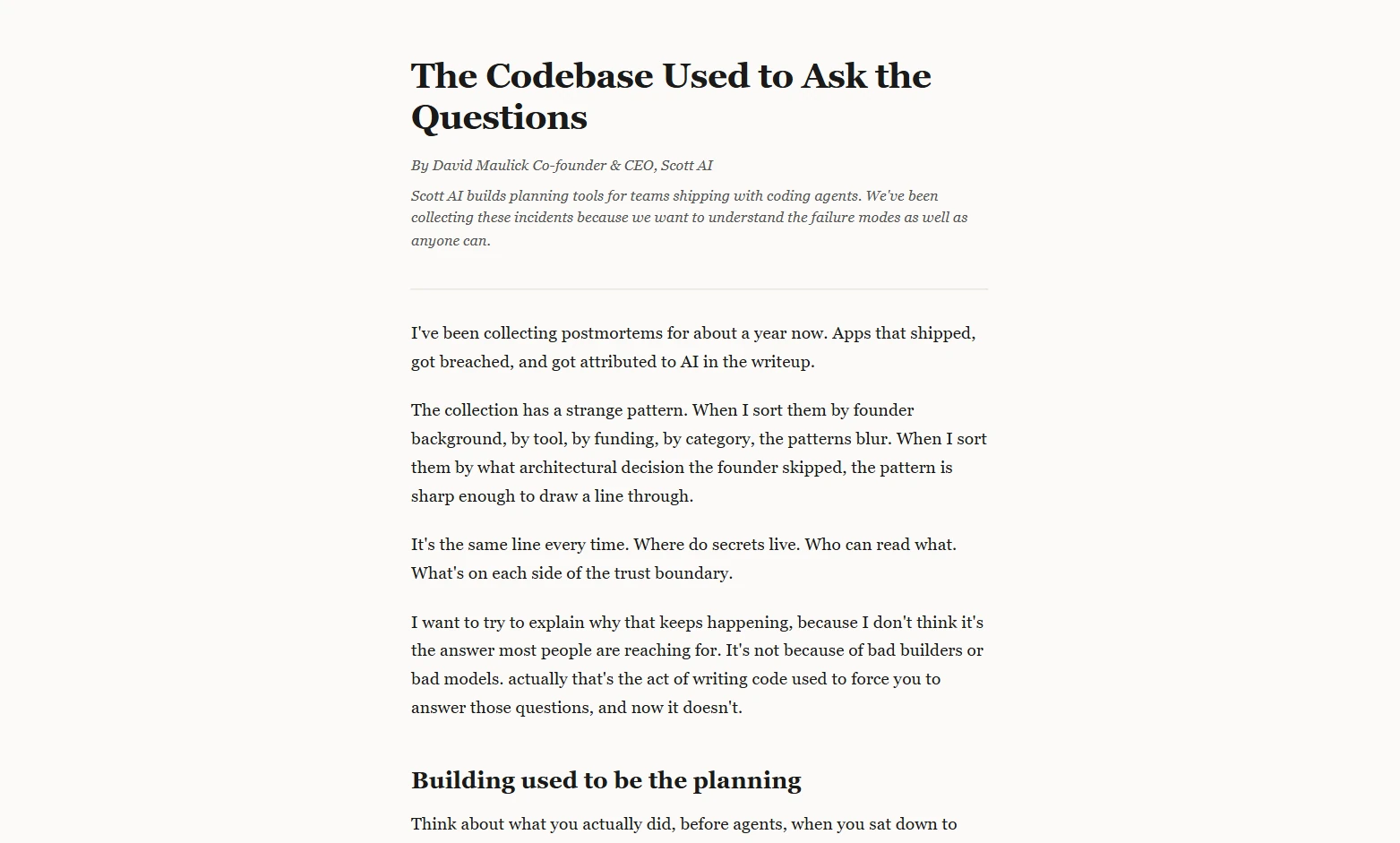
Opening of the Varnan-written draft. Scott did not publish this version.
Where the Engagement Ended
Scott came to Varnan with a clear hunch: agents could make team alignment the slow part of building software.
Varnan found the first teams to talk to, wrote the story, made the Reel, and prepared the list. The product release, publishing decision, and sender never lined up in the same window.
The work ended before a live outbound loop. Scott left with material it could still use. Varnan has no meetings, pipeline, or revenue result to claim.
Frequently Asked Questions
Did Varnan validate product-market fit for Scott AI?+
Varnan tested the problem, the language, and the people most likely to feel it. We found a group of teams with a real review problem and another group to leave alone. Product-market fit needs a live product, repeat use, and customer behaviour over time. This engagement gave Scott a starting point and the material for a live test.
Did Varnan run outbound from the 97-record list?+
No. Scott did not provide a company inbox for cold outreach because of security concerns. Varnan prepared the list and kept it ready for Scott. We do not claim email sends, reply rates, meetings, or pipeline.
What did the Reel achieve?+
The Reel reached 13,903 views, with 152 likes, 85 saves, and 35 sends. The page includes the original analytics images. Those numbers describe the Reel. They do not describe downstream commercial results.
Why include the Adobe interview when Adobe was not a fit?+
The Adobe conversation kept the target audience honest. A company can use coding agents without feeling pressure to change its planning process. The interview told Varnan where Scott should not look for its first buyer.
Three High-Impact Moves in 15 Days
Most of what you just read started with one move, the right product in front of the right audience. Varnan Ignition packages that into a fixed 15-day sprint, so you can watch the engine work before committing to anything longer.
Here's what's inside:
- Media on a 250K network. Your product placed in front of an organic audience of 250,000 through content built for it.
- A taste of Reddit marketing. Strategic placement in the communities your users already sit in, with a credible presence rather than a drive-by post.
- 5 design partners. Sourced from our founder and operator network, so you get structured feedback from people who have built and shipped.
The shape is simple: apply, a 45-minute onboarding call, 14 days of execution, then results in your hands. 15 days, $2,000, and you keep everything we build. No commitment past the sprint.
Are you a Good Fit?
We don't work with everyone. We work best with founders who have a product, traction, and are ready to accelerate growth.
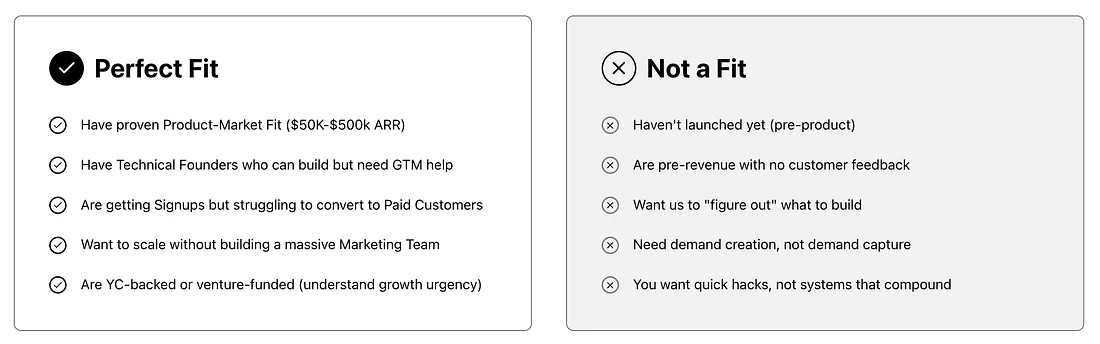
If you've built something worth discovering, we'll help the right people find it.
Book a strategy session
We'll analyze your product positioning, identify your target audience, and outline a 90-day plan to measurable results. Start your journey by booking a free call.